
Last updated November 23, 2026
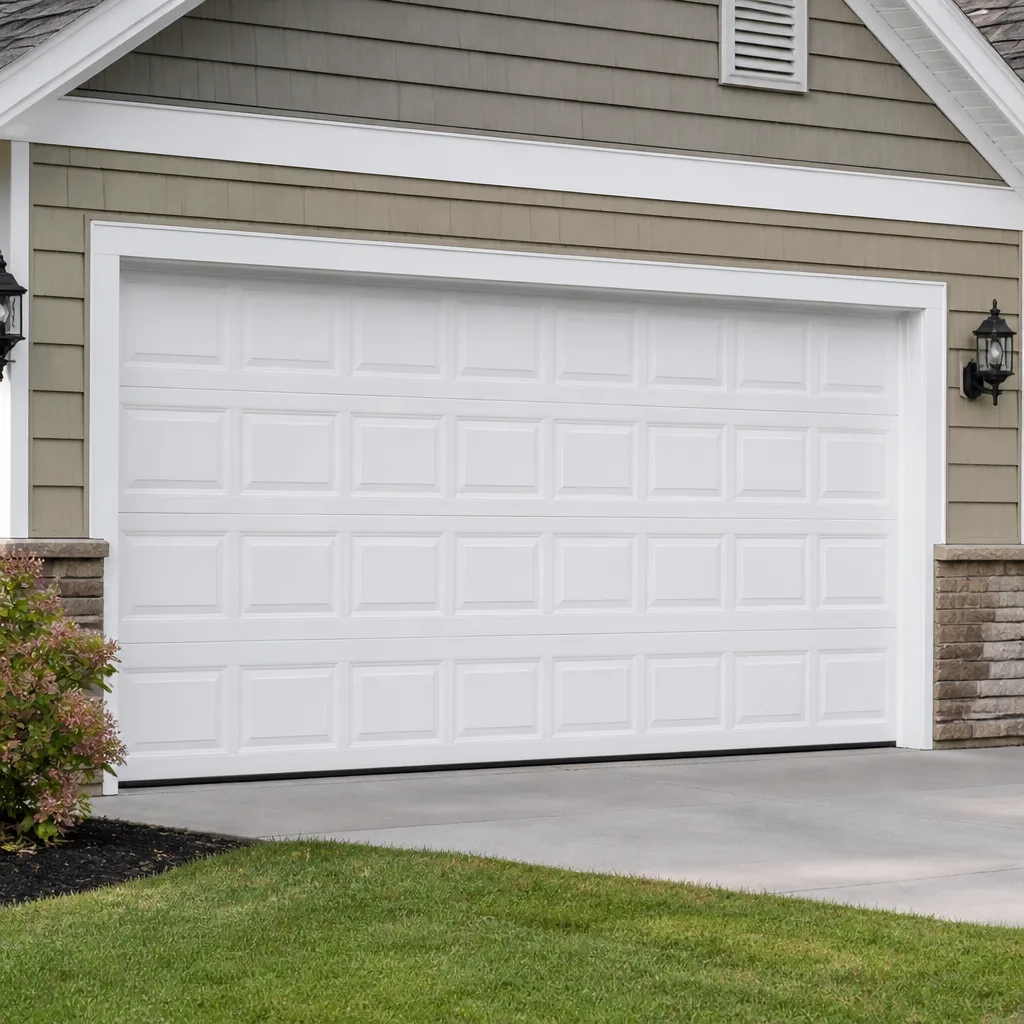 Raised-panel steel
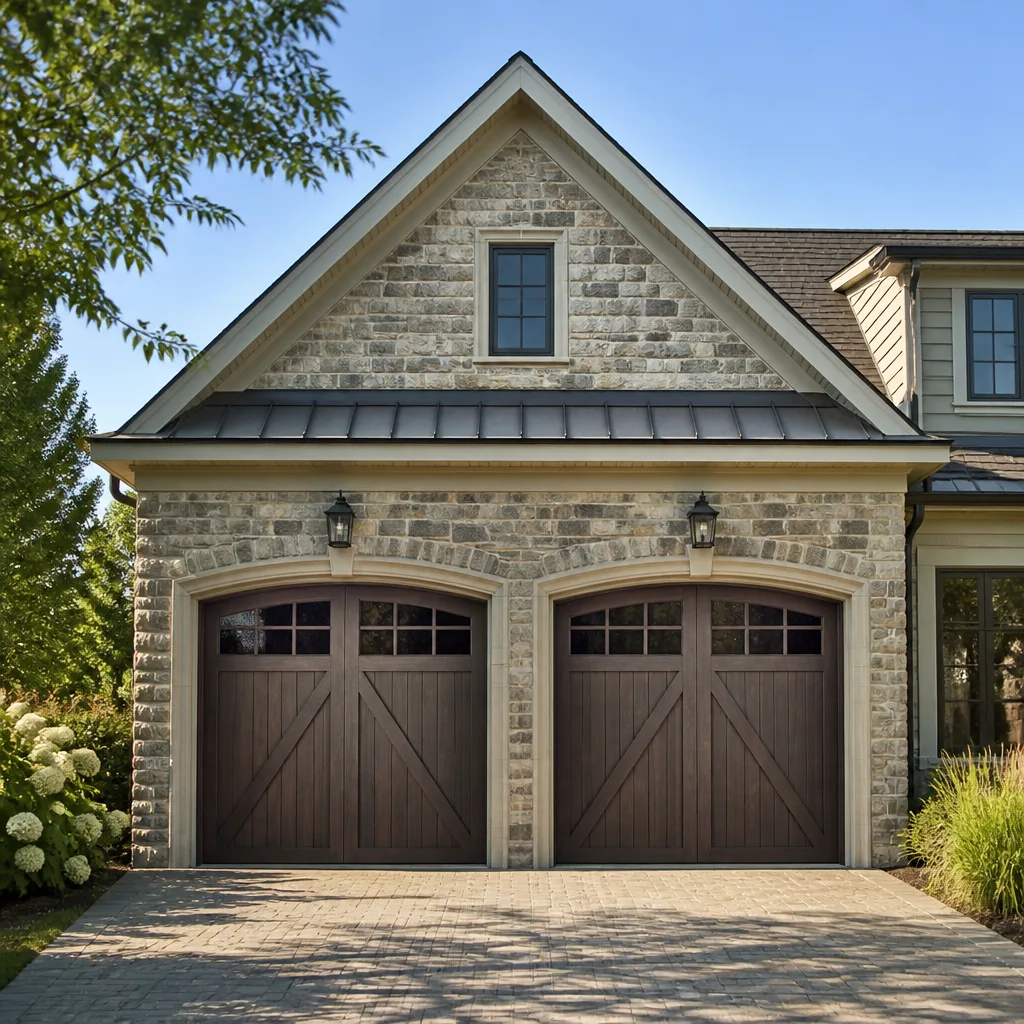 Carriage house
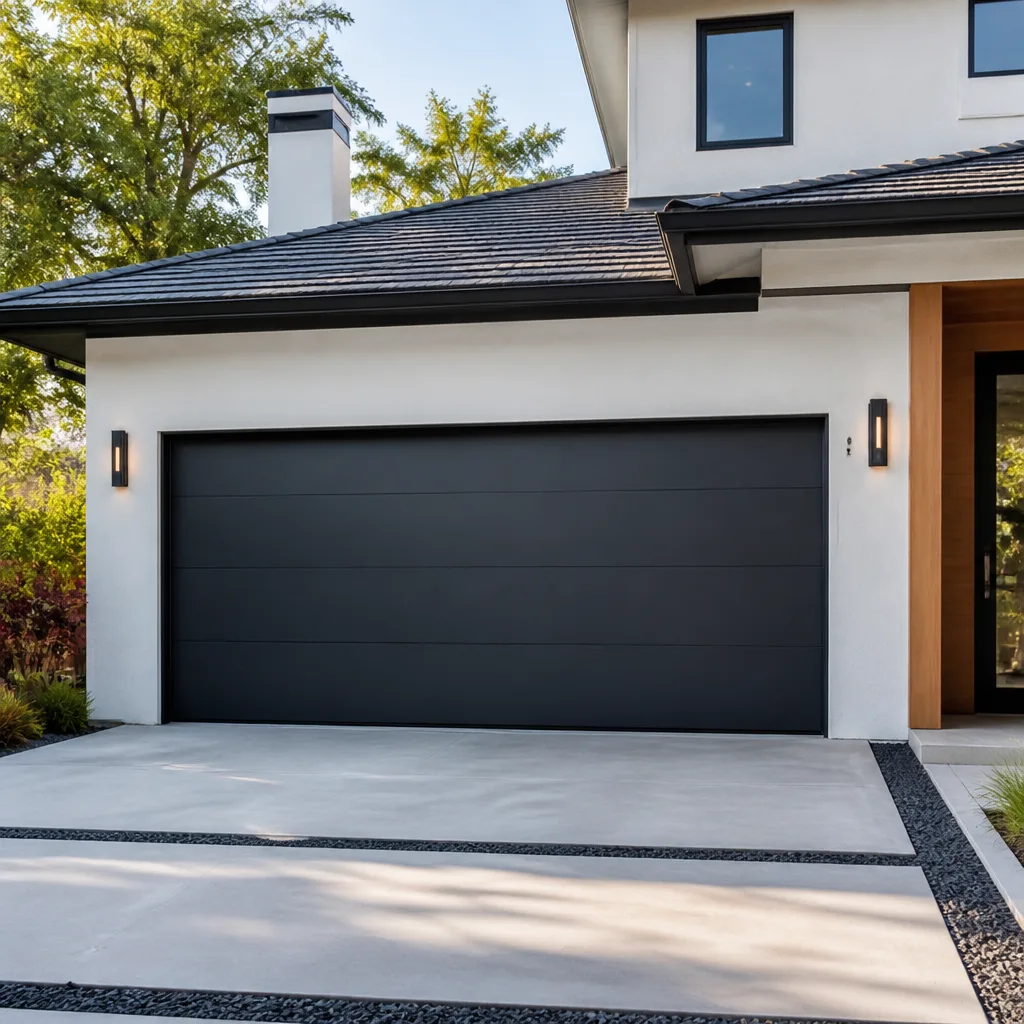 Modern flush
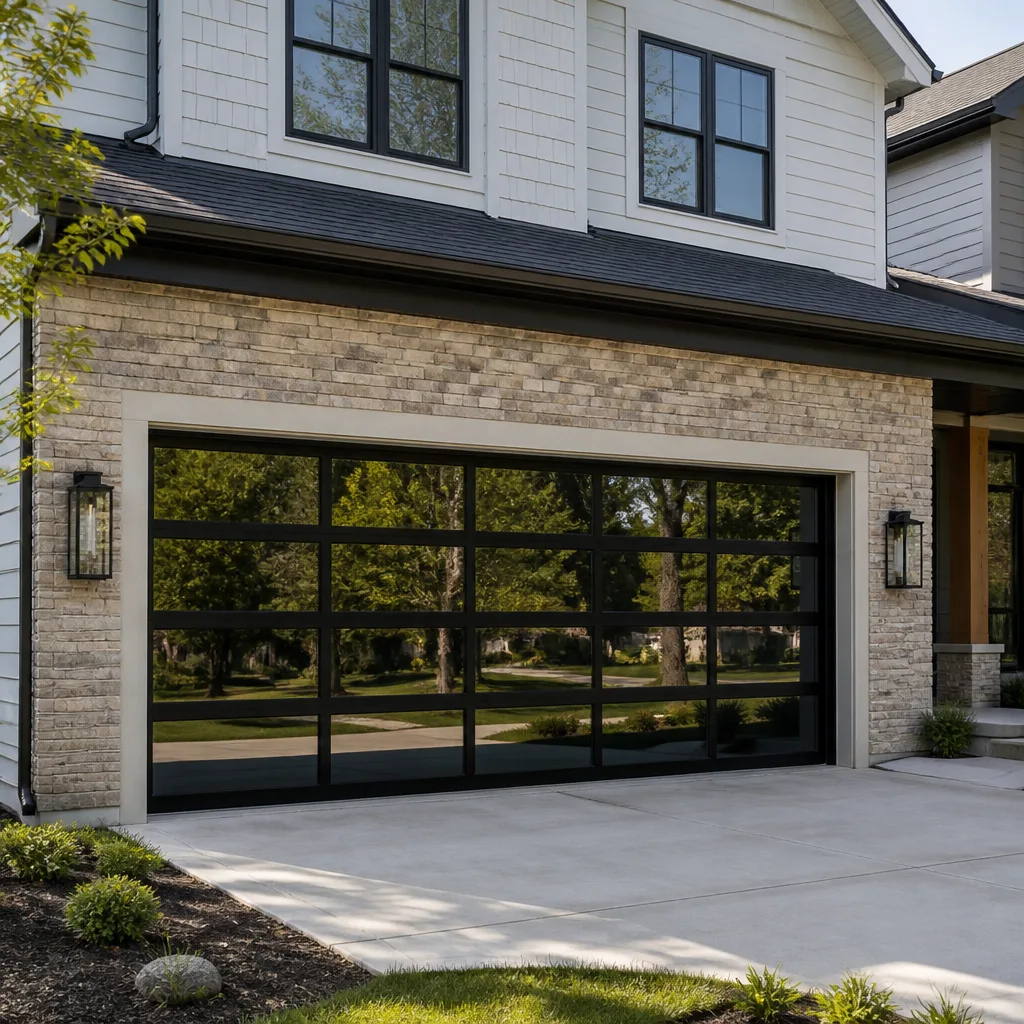 Full-view glass
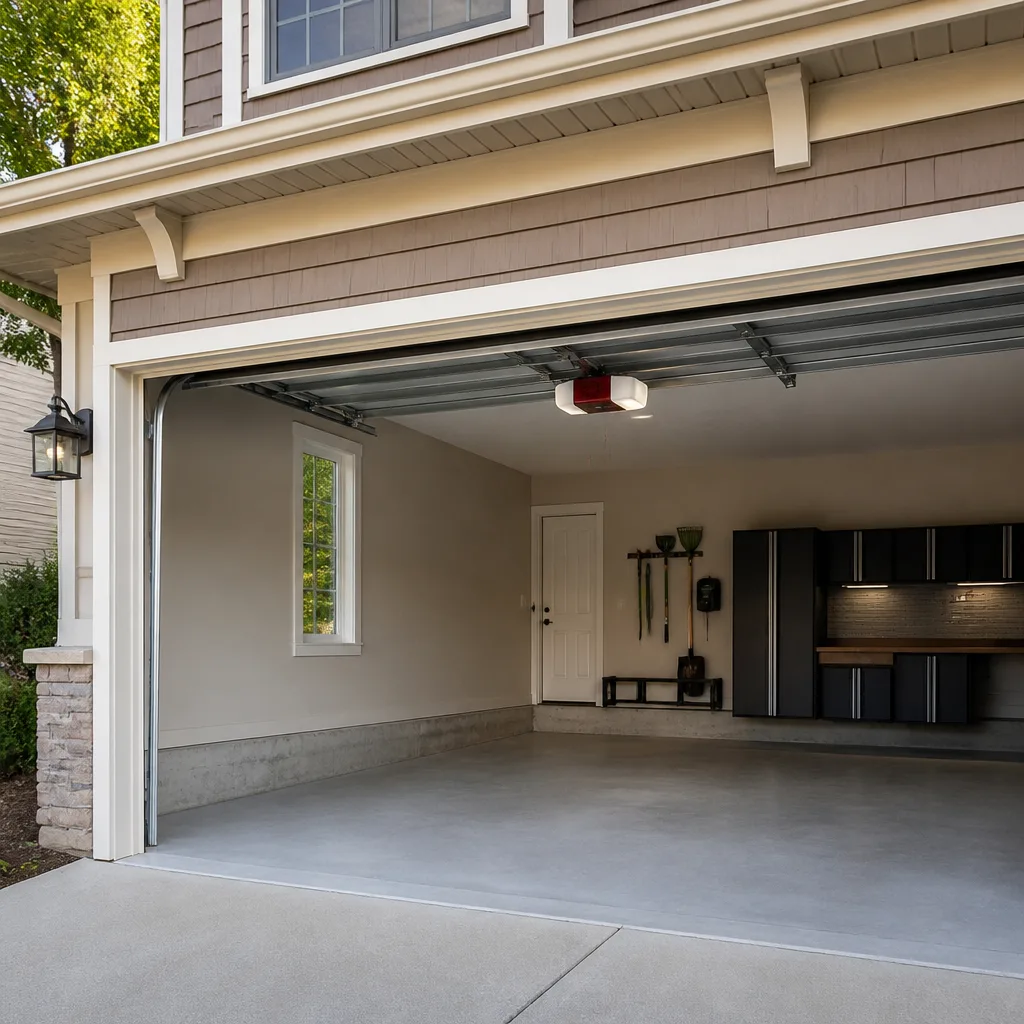 LiftMaster openers
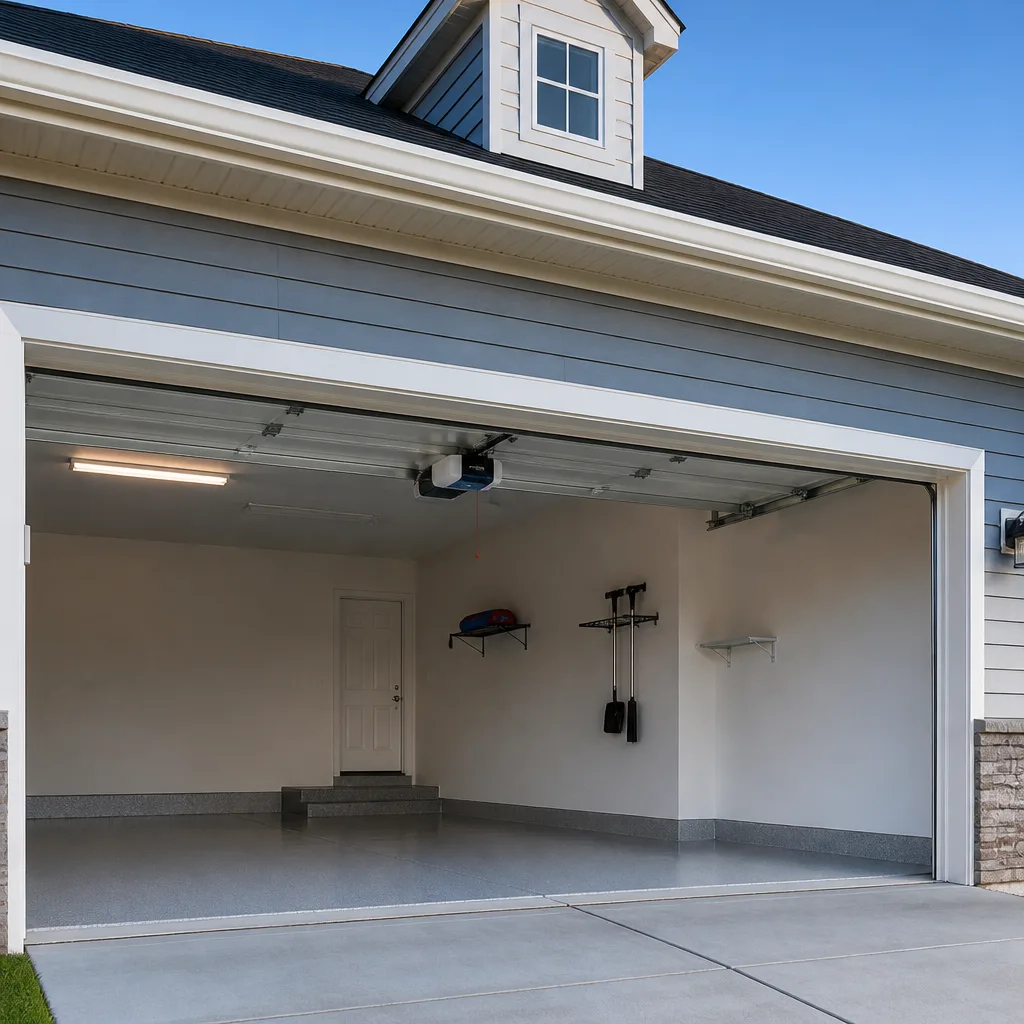 Chamberlain openers
Full 25-point door and opener safety check with every visit - springs, cables, rollers, tracks, and your LiftMaster or Chamberlain opener included
You get a price before we start. It does not change when the pro arrives.
Get your free estimateGarage Door Repair Troubleshooting in Towson: Common Problems and How to Fix Them
The door that “just stopped working” almost always gave you three warnings first. You heard them and didn’t know what to listen for. A faint grind in the last two feet of travel. A thump the door never used to make. A motor that strained a second longer than it should. Most Towson homeowners call us on the day the door finally quits, but the failure had been building for weeks. This guide changes that. We’ll show you how to work out which of five mechanical categories your problem lives in, which symptoms mean stop touching it, and how to tell a genuine failure from one of Maryland’s humidity quirks. You’ll finish knowing whether you’re looking at a ten-minute check or a call to a specialist.
Quick Answer
Most garage door failures start in one of five places: the opener, the springs, the tracks and rollers, the panels, or the safety sensors. Match the symptom to the category first, because that single step tells you whether it’s something small you can handle or a job that needs a trained specialist. Anything involving spring tension or a detached cable is always the second kind.
Styles & brands we work with
- Raised-panel steel
- Carriage house
- Modern flush
- Full-view glass
- LiftMaster openers
- Chamberlain openers
Table of Contents
- The 5-Category Decision Tree: Start Here
- What Your Door’s Noise Is Telling You
- The Two Repairs You Should Never Attempt Yourself
- How Maryland Humidity Fools Towson Homeowners
- The 5-Minute Visual Inspection Checklist
- Opener Problem or Mechanical Problem? How to Tell
- What Garage Door Repair Costs in Towson
- Common Mistakes to Avoid
The 5-Category Decision Tree: Start Here
Every garage door problem in Towson falls into one of five mechanical categories. Sorting your symptom into the right one is the fastest way to know what you’re dealing with, because each category has its own failure patterns, its own sounds, and its own line between a homeowner’s job and a specialist’s job.
Here’s the split we use when we walk through a diagnosis:
- Opener and electrical. The door won’t respond to the remote or wall button, or the motor runs briefly and gives up. Symptoms: clicking, silence, a light that works when the door won’t, or a straining but non-moving carriage. This is often a control, sensor, or logic-board issue. Opener repair handles it.
- Springs and cables. The door feels impossibly heavy, won’t stay open, or makes a loud pop followed by stillness. Symptoms: a door you can lift by hand but that crashes down, a visible gap in the spring coils, a cable lying loose against the frame. This category is specialist work, full stop.
- Tracks and rollers. The door binds, jerks, or drifts off-line. Symptoms: visible bends in the track, rollers that look worn or missing, a door that rubs the frame on one side. Some of this is adjustable; bent track usually isn’t.
- Panels and structure. The door is dented, cracked, or sagging. Symptoms: a bow across the width, cracked glazing, panels separated from the stiles. Panel damage can be cosmetic or structural, and you need to know which.
- Sensors and safety systems. The door closes two feet and reverses, or won’t close at all with the button held. Symptoms: blinking sensor lights, an obstructed beam, a sensor knocked out of alignment. This is the most common easy fix on the list.
Run down the list and pick the one that matches what you’re seeing or hearing. That single choice tells you whether to grab a screwdriver or the phone.
What Your Door’s Noise Is Telling You
A garage door should sound like a steady mechanical rumble and almost nothing else. Any new sound is information. Homeowners in neighborhoods like Rodgers Forge and West Towson tend to describe three distinct kinds, and each one points to a different part.
- Grinding. Metal on metal, often worse as the door nears the top or bottom. This is usually dry or worn rollers, a lack of lubrication on the hinges and rollers, or a track the door is scraping against. It’s often the cheapest problem to fix and the one most people let run for years.
- Popping or snapping. A sharp crack that happens once and stops, followed by a door that suddenly feels heavy. That’s the sound of a torsion spring breaking. It doesn’t grind or repeat; it happens once and changes the door’s behavior permanently. Stop using the door.
- A straining motor. The opener whines or labors but the door barely moves, or moves unevenly. This usually means the motor is fighting something mechanical: a binding track, a stretched chain, or a door that’s out of balance because a spring is weak. Straining is the motor telling you the problem is upstream of it.
Two other sounds worth recognizing. A rattle on open and close is usually loose bolts on the hinges or the opener bracket. A thump or bang at the start or end of travel often points to a misadjusted limit switch on the opener, meaning the motor is driving the door harder against a physical stop than it should.
What you’re listening for is the difference between a maintenance noise and a failure noise. Grinding and rattling are maintenance. Popping and banging are failures. If you heard a pop, don’t run the door again just to confirm.
The Two Repairs You Should Never Attempt Yourself
We can tell homeowners exactly what’s wrong with their door and still mean it when we say two jobs are off the table. Not because they’re hard, but because the stored force inside a garage door can injure or kill. This is the safety caveat that matters more than any other on this page, and it’s why garage door spring repair is a core service we handle directly rather than a referral.
1. Spring tension
Torsion springs sit above the door under heavy tension. Extension springs run along the sides under similar load. Either kind stores enough force to move a door weighing hundreds of pounds, and that force is released the moment the winding bars slip or a set screw lets go. You cannot see the tension. You cannot judge it by feel. And if a spring is already broken or weakened, the door may be resting on the cables alone, which is a live hazard. Adjusting tension means winding the spring with the right bars and the right turns, and it needs a trained technician. Never reach up to a spring and never try to “test” a door by hand when you suspect a spring failure.
2. Cable reattachment
Cables hold the door’s weight in balance with the springs. A cable that has come off its drum is under enormous tension even when the door looks slack. Grabbing a dangling cable or trying to loop it back onto the drum by hand is how serious injuries happen. If you can see a loose cable, stop, prop nothing, touch nothing, and call for service.
Everything else on this page is fair game for a homeowner who’s careful. These two aren’t. If you’re unsure which side of the line you’re on, that’s your answer: call, and describe what you see. We’ll tell you what it is over the phone.
How Maryland Humidity Fools Towson Homeowners
Towson sits in a climate with real seasonal swing. Humid summers that swell wood, dry winters that shrink it, and temperature changes through the year that move metal. That movement produces a set of symptoms that look like failures but aren’t.
Wood doors swell. A wood or wood-framed door absorbs moisture in the humid months and can bind against the frame or stick at the top. Homeowners in older Towson neighborhoods with original wood doors feel this most in mid-summer. It often reads as “the opener is failing,” when the opener is actually fine and the door is just tight against its stop.
Metal tracks shift. Steel tracks expand and contract with temperature. A track can develop a slight bow or pull out of plumb where it anchors to the frame, and the door starts rubbing on one side. The fix is often a realignment of the track and hinge, not a new door.
Panel gaps appear. Panels and joints can open slightly as materials expand and contract at different rates. A small gap that shows up in one season and closes in another is normal movement, not damage.
Seals go brittle. The weather seal along the bottom of the door hardens with temperature cycling and starts to crack or drag. It’s a cheap part, easy to check, and worth a look before you blame the opener for a door that won’t sit flat.
The pattern to remember: if a problem appears with a season change and eases when the weather stabilizes, suspect the environment before the mechanism. If it’s constant and getting worse, it’s mechanical.
The 5-Minute Visual Inspection Checklist
You can cover most of a door’s common failure points in under five minutes with no tools. Do this before you call anyone, because it often answers the question for you. Work through it in order:
- Look at the springs. Stand outside the door’s path. Check whether the coils look evenly spaced and unbroken. A visible gap in a coil means the spring is broken. Don’t test tension by hand.
- Check the cables. Look for a cable that’s off its drum or lying loose. Don’t touch it, just note it.
- Watch the rollers and hinges. Look for rollers that are chipped, missing, or grinding against the track, and hinges that are visibly loose or bent.
- Run the door and listen. With the door clear, run it up and down once. Note where in travel it grinds, jerks, or slows.
- Test the balance. Disconnect the opener (pull the release cord) and lift the door halfway by hand. If it stays put, it’s balanced. If it slams down, the springs are weak, and it needs professional attention.
- Test the safety sensors. Confirm the two sensors at the bottom of the frame have steady (not blinking) lights, and sweep a hand through the beam while the door closes. It should reverse immediately.
If all six checks pass and the door still misbehaves, you’re most likely looking at the opener itself, and garage door opener repair is where the answer sits. If any check fails, note which one and mention it when you call. A specific symptom helps us diagnose faster.
Opener Problem or Mechanical Problem? How to Tell
The single most useful diagnostic question in garage door troubleshooting is whether the opener is failing or the door is. The two produce similar symptoms and completely different fixes.
Here’s the split:
- Signs it’s the opener. The door won’t respond to the remote but responds to the wall button (or vice versa). The light on the opener works but the motor doesn’t. The door reverses for no visible reason. The remote has to be pressed from very close. These point to the logic board, the safety sensors, the travel limits, or the remote battery, all within the garage door opener repair family.
- Signs it’s mechanical. The opener runs but the door doesn’t move, or the opener strains and the door moves slowly and unevenly. The door is heavy by hand. The door binds at a specific point every time. These point to springs, tracks, rollers, or balance, and the opener is the messenger, not the problem.
A simple way to sort it: pull the release cord and run the door by hand. If it moves easily and stays where you put it, the mechanical side is healthy and the issue is the opener. If it’s heavy or won’t stay, the mechanical side is the culprit, and the opener is fine.
One more angle worth knowing. If your door uses a LiftMaster, Chamberlain, or Genie unit and the symptoms are all electrical, it may be the opener. If it’s a Clopay or Amarr door that binds, the door itself is more likely. Working on the brand you already have is why we stay fluent across the major systems, so a technician arriving knows the unit rather than learning it on the spot.
What Garage Door Repair Costs in Towson
Repair pricing depends on which category your problem falls into. Here are the typical ranges we see for common jobs in the Towson area. These are estimates; the written quote you receive sets the final price, and nothing starts until you agree to that number.
- Spring replacement (one spring): $180 to $340. A matched pair is usually replaced together, so a pair runs about twice that.
- Cable repair or replacement: $150 to $300.
- Roller and hinge replacement: $120 to $250.
- Track realignment: $130 to $280.
- Sensor diagnosis and repair: $90 to $180.
- Opener repair (motor, logic board, travel limits): $120 to $300.
- Panel replacement: $250 to $700, depending on panel size and door model.
Two things matter as much as the numbers. First, there’s no surcharge for calling us on a bad day: the price is set per job by the estimate, and urgency doesn’t change it. Second, the quote you agree to is what you pay. If the technician finds something unexpected, you’ll hear about it before any extra work, and you’ll approve it first.
Same-day service is available when your door can’t wait, and emergency service is a core part of what we do. Call (877) 792-6801 for an exact quote. The estimate is free, and we can often talk through the likely cause before anyone is dispatched.
Common Mistakes to Avoid
- Forcing a door that’s gone heavy. If the door feels twice as heavy and won’t stay open, the springs are compromised. Running the opener against that load can burn out the motor or make the situation worse. Stop using it.
- Using the opener as a diagnostic tool. Pressing the remote repeatedly to see if it works again is how a small sensor problem becomes a stripped chain or a burned-out motor. Diagnose from the outside first.
- Lubricating the wrong parts. Grease on the springs or on the opener rail doesn’t fix grinding and can attract grit that makes it worse. Keep lubrication to the rollers and hinges where it belongs, and check with a technician about what your specific door needs.
- Blaming the door for a humidity problem. A door that sticks in July and frees up in October is doing what wood and metal do in a Towson summer. Replacing hardware won’t fix a seasonal fit issue; adjusting or sealing it will.
- Ignoring a blinking sensor light. The sensors are the easiest thing on the page to check and the most common cause of “the door won’t close.” It’s also the cheapest fix you’ll ever get.
- Trying to fix a loose cable or broken spring yourself. These are the two jobs we’ll keep saying this about: the stored force in these parts can send someone to the hospital. Leave the tools down.
- Assuming an old door needs replacing. A sagging or noisy door is often a track, roller, or spring problem that full garage door repair can resolve for a fraction of a new door. Get an estimate before you decide.
See the difference
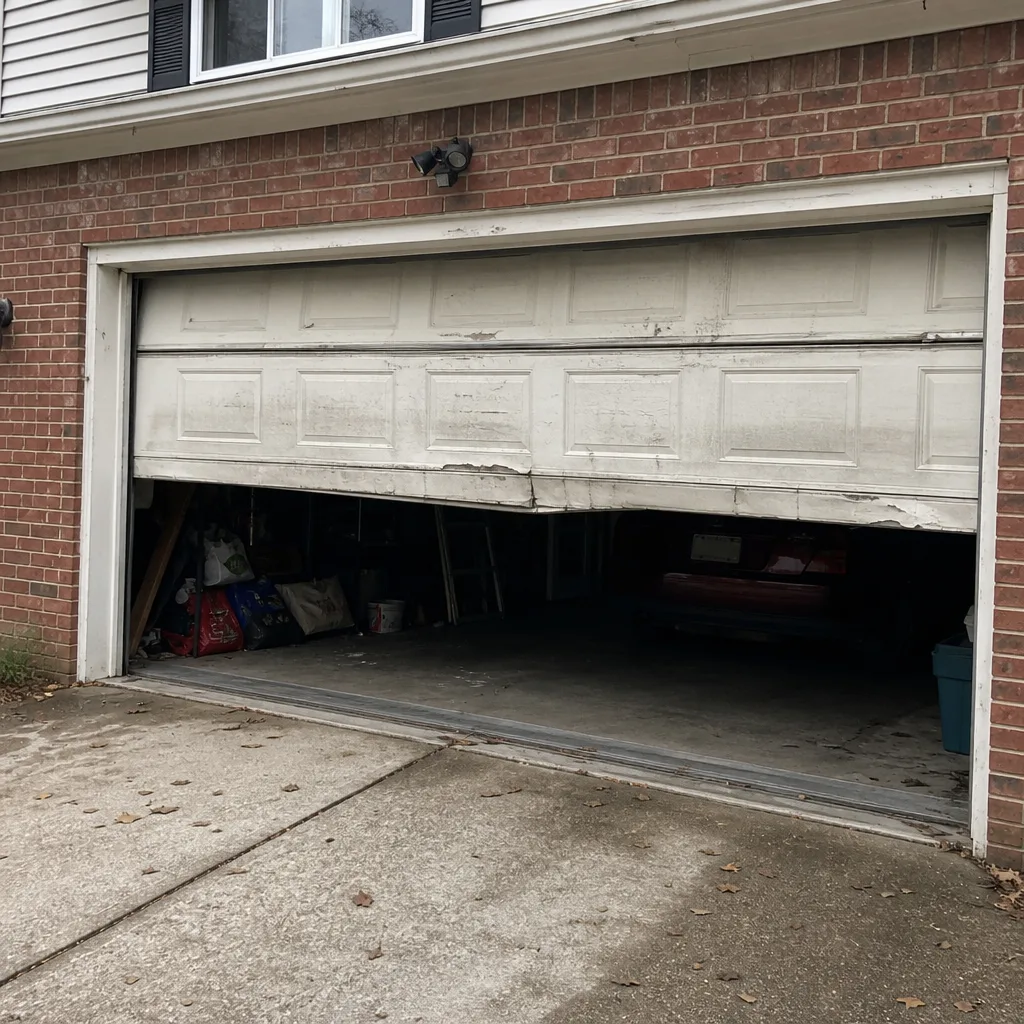 Before
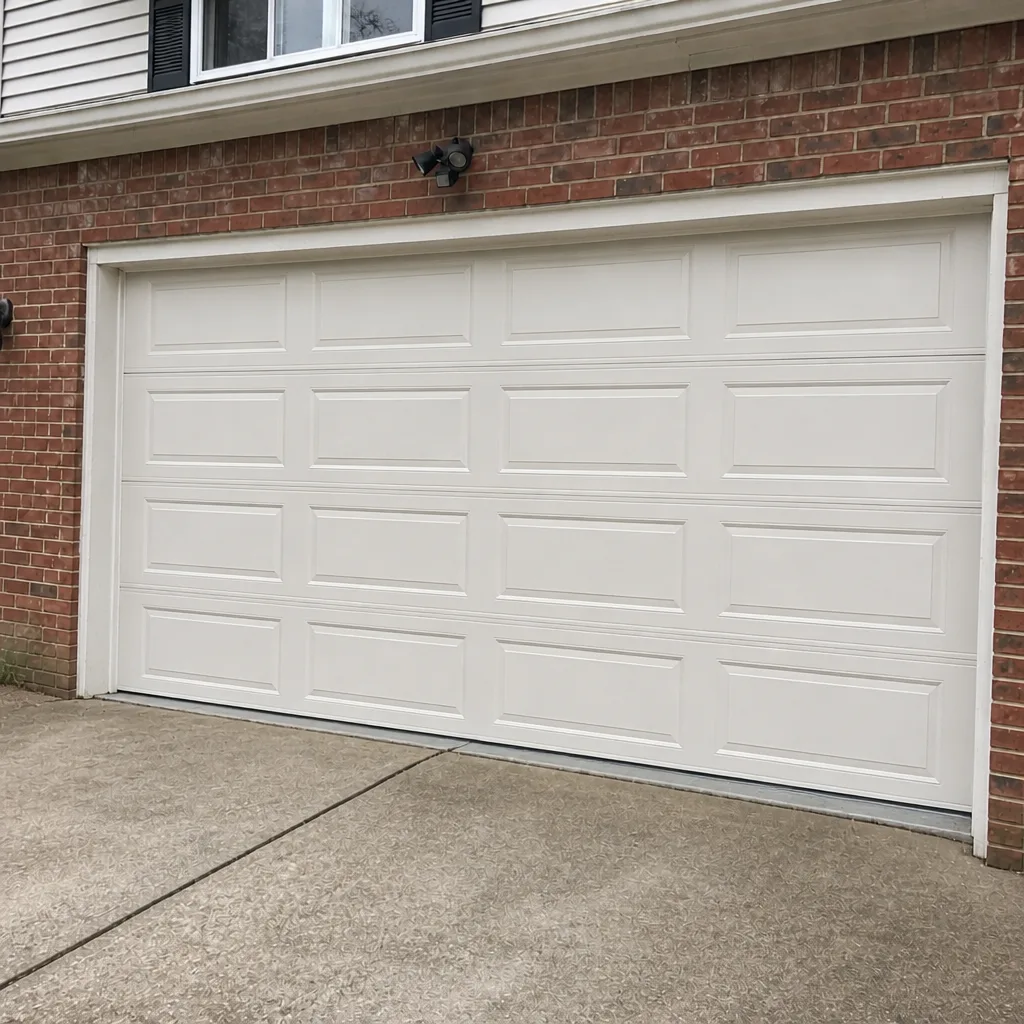 After
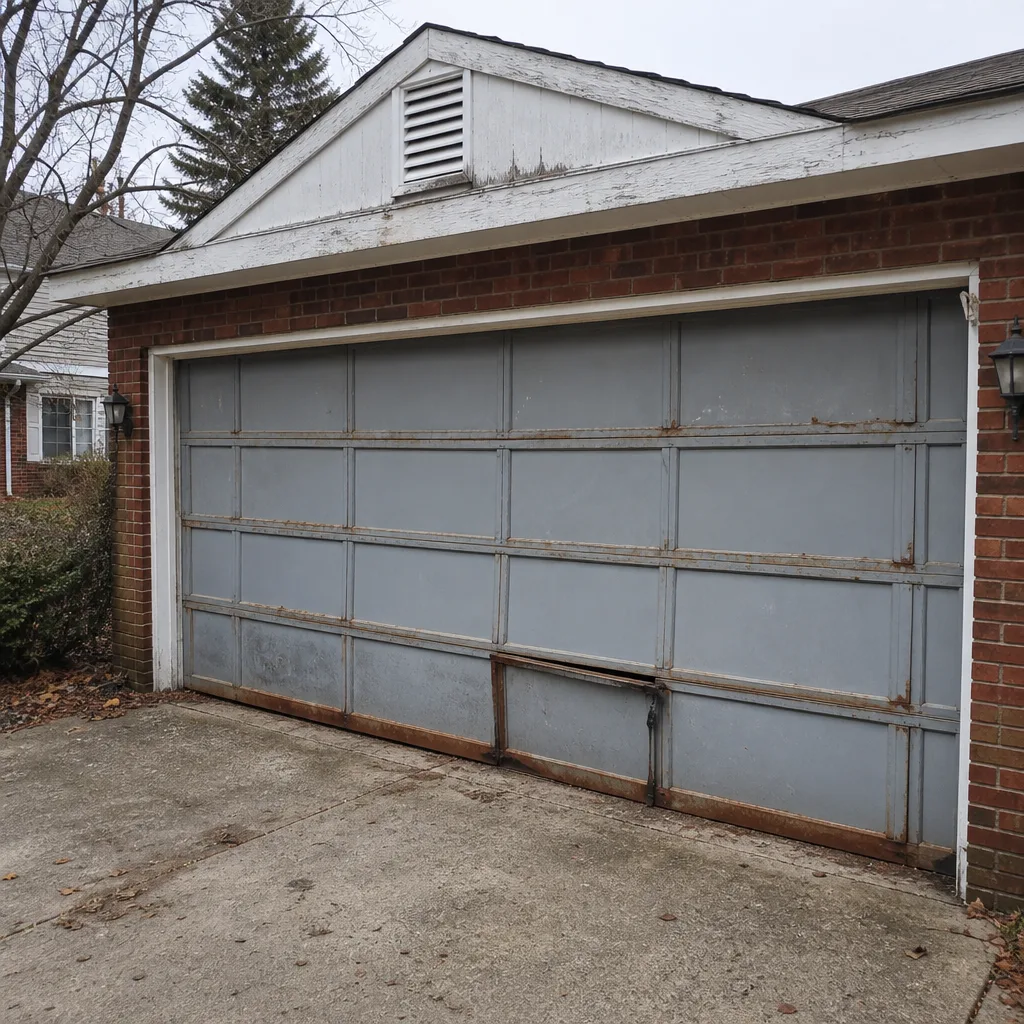 Before
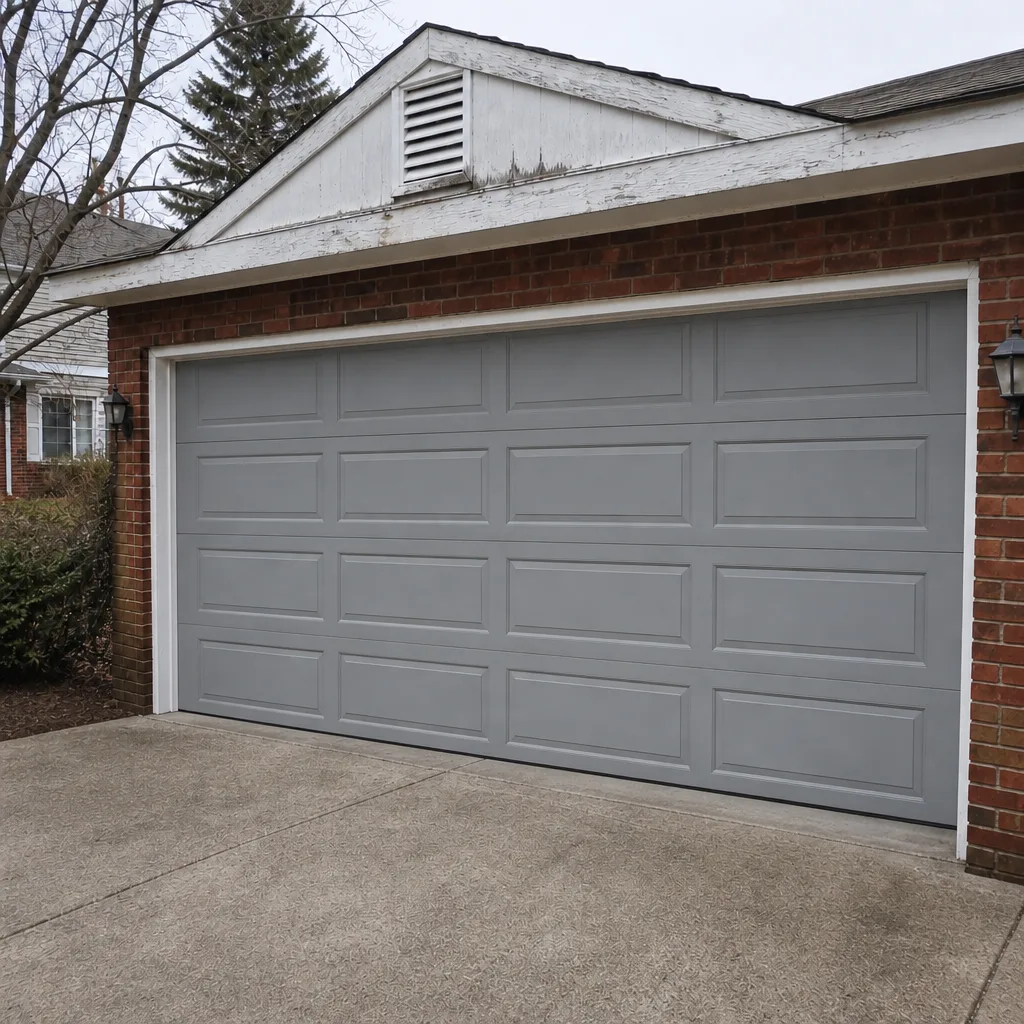 After
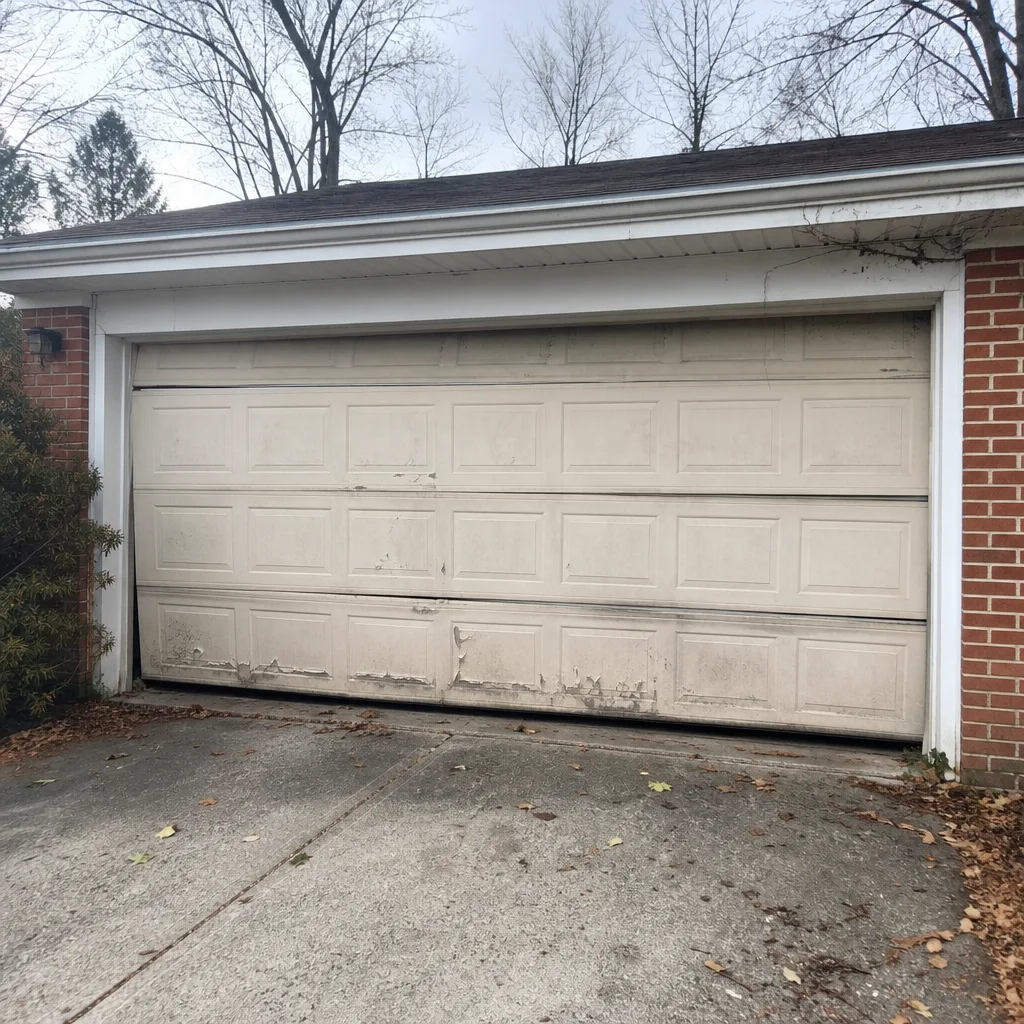 Before
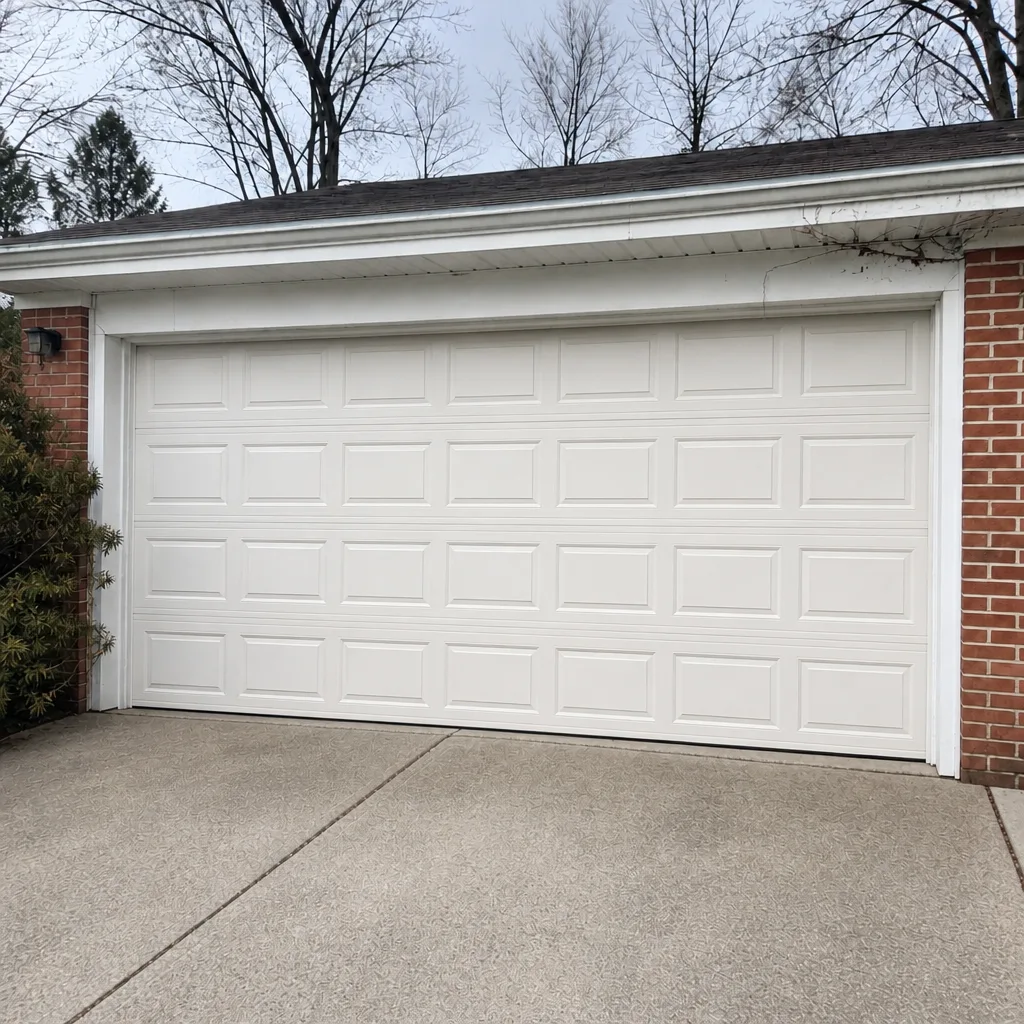 After
When to Call a Professional
Some problems resolve on their own. These don’t. Call a specialist when you see a broken spring, because the door is being held by the cables alone and running it risks dropping it. Call when you see a loose cable, when the door binds at a specific point every time, when the opener runs but the door doesn’t move, or when it reverses without anything in its path. Call when a door feels heavy at the halfway point, and call when you’ve been through the five-minute checklist and still can’t tell what’s wrong. Garage Door Repair Towson offers free estimates in Towson. Call (877) 792-6801, we answer 24/7, and fast dispatch from 7am to 7pm runs Sunday through Friday. Our technicians have up to 11 years of experience, and every service is garage-door-only, so the person who arrives works on doors and nothing else. From a broken opener to a full new door, we work on the brand you already have.
Frequently Asked Questions
Spring repair in Towson typically runs $180 to $340 for one spring, and about twice that for a matched pair, which is usually replaced together. That’s an estimated range; the written quote sets the final price, and it’s free. Call (877) 792-6801 for an exact quote. Estimates are free.
Yes, same-day service is available when a door is stuck, broken, or won’t close securely. We answer the phone 24/7, and fast dispatch runs 7am to 7pm, Sunday through Friday. Call (877) 792-6801 and describe the symptom; that helps us route the right technician.
No, the price you agree to is the price you pay. If the technician finds something unexpected once the door is apart, you’ll hear about it and approve any change before work continues. Nothing is added without your agreement, and the estimate is free.
Yes, the local professionals we connect you with are licensed and insured as their state requires. Every service is garage-door-only, and our technicians have up to 11 years of experience with spring, opener, and door systems. Call (877) 792-6801 with any questions about credentials before you book.
No. Torsion and extension springs hold enormous stored force, and that force releases when the winding equipment slips. It’s the single most dangerous repair on a garage door, and it belongs to a trained technician. Don’t touch the spring or run the door until a specialist sees it. Call (877) 792-6801 to book a spring repair.
It’s usually the wood swelling in Towson’s humid months and binding against the frame, not a failed opener. Metal tracks also expand in the heat and can shift slightly. If the door frees up as the weather shifts, suspect the environment. If it sticks year-round and gets worse, it’s mechanical and should be looked at.
The Bottom Line
Garage door problems aren’t a mystery once you know the five categories. Match the symptom to the category, run the five-minute check, and you’ll know instantly whether you’re dealing with a sensor, an opener, or something that needs a specialist. The two hard lines are spring tension and cable reattachment, and they’re hard for a reason. Everything else is manageable with a careful look. The door that “just stopped” was talking to you first. Listen, sort the symptom, and call when the category tells you to.
Need a specialist in Towson? Call (877) 792-6801 for a free estimate. We answer 24/7, with fast dispatch from 7am to 7pm, Sunday through Friday. Whether your door is stuck right now or you’ve been meaning to look at that grinding noise for a while, we can help you get to the right fix efficiently.
Written by the team at Garage Door Repair Towson.